
What the Montague Gardens team needed
The client was a busy sign shop in Montague Gardens serving walk-in trade, repeat business customers and a few local installers who needed same-day colour work. Their existing office colour machine was fine for invoices and the odd proof, but it struggled once the jobs became larger and more frequent. Posters were taking too long, colour shifts were causing reprints and the team was spending too much time nursing cartridges instead of getting work out the door.
The brief was straightforward. They wanted a higher-capacity poster printer with matching inks, a sensible media plan and a setup that would suit Cape Town conditions. In an area like Montague Gardens, with dust from the industrial side and summer heat in the workroom, reliability matters more than fancy spec sheets. The team needed a machine that could handle daily use, print clean solid colour, and keep going through load-shedding schedules without losing its place in the production line.
- More consistent colour on posters and proof sheets
- Higher-capacity ink supply for fewer stoppages
- Better match between media, ink and job type
- Practical setup for a small production team
When sign work outgrows office colour
Office colour printers are useful for many things, but they are not always the right fit for sign work. Once a team starts producing A2 proofs, presentation posters or repeated short runs, the limits show quickly. Ink costs climb, colour matching becomes less predictable and the printer spends too much time cooling, cleaning or asking for attention. That is when a wide-format or higher-capacity poster unit makes more sense.
For this job, the key was not only print size. It was ink economy, media handling and day-to-day speed. The shop needed to print on coated stock, heavier presentation paper and a few display media options, with enough flexibility to adjust from proof to finished piece. We looked at the sort of work they do in a typical week, then matched the printer and consumables to that pattern instead of oversupplying them with gear they would only use once in a while.
- Poster and proof output without constant cartridge changes
- Cleaner handling of coated media and presentation sheets
- More predictable cost per print for recurring jobs
- Less downtime when the workshop gets busy
What MyColour supplied and set up
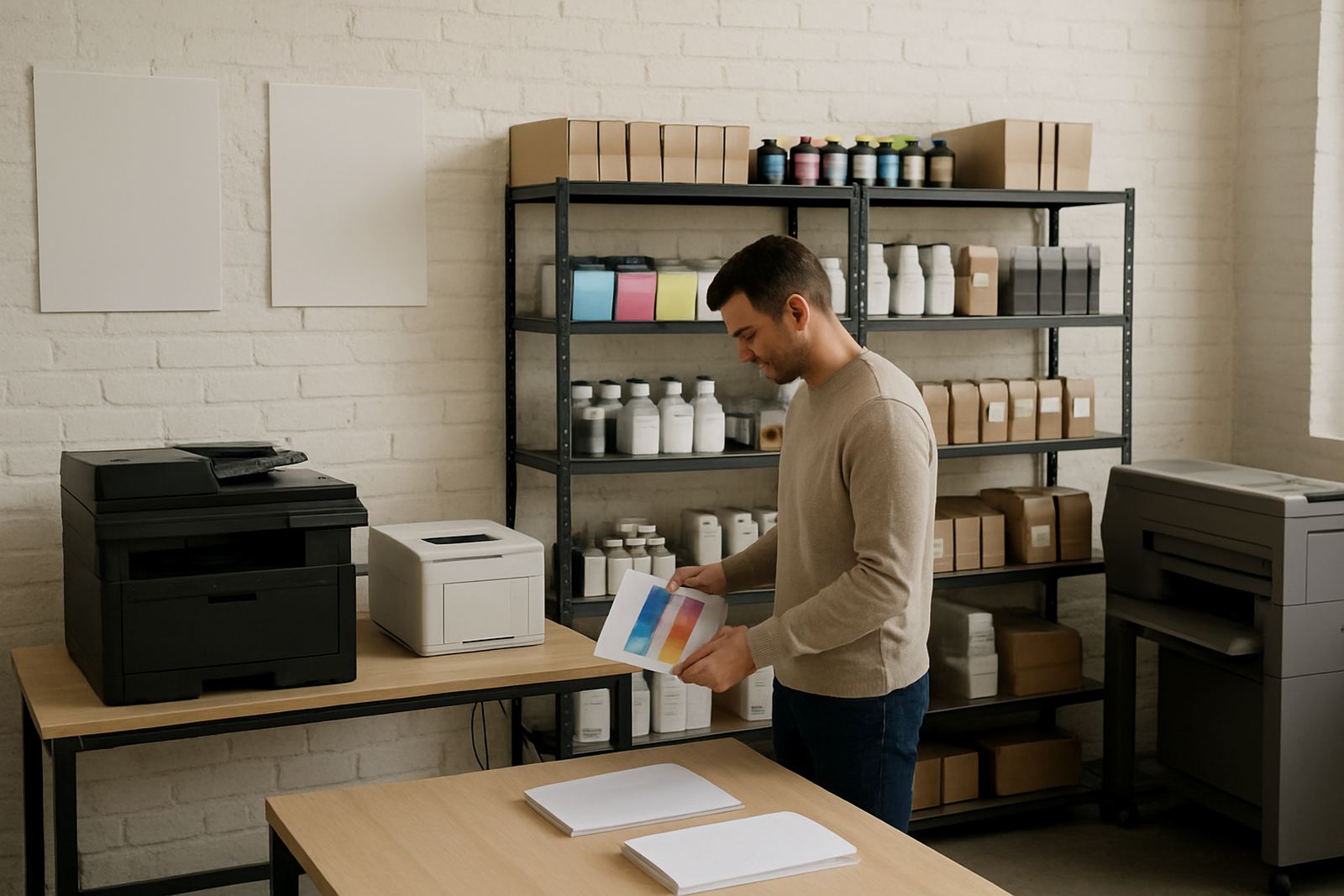
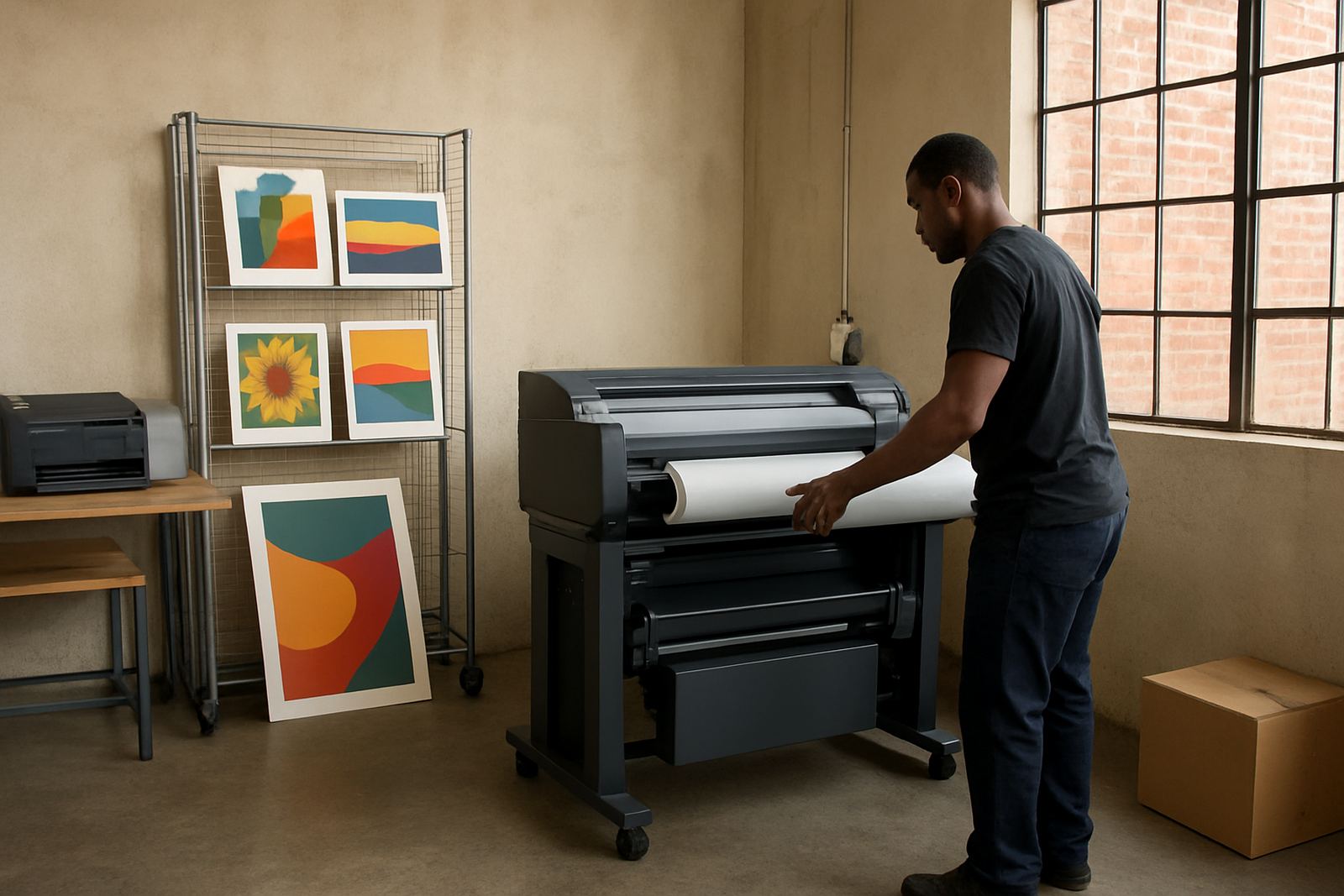
We supplied a higher-capacity colour printer suited to poster production, along with stock-matched inks and the right media recommendations for the shop’s regular job mix. The printer was installed with the team’s workspace in mind, so there was enough room for loading stock, checking output and keeping consumables close by. We also completed a print quality check on arrival, then ran sample jobs across the main media types they use every week.
As part of the setup, we covered ink choices, media matching and the changeover process for the staff who would use the machine daily. A shop like this cannot stop for long training sessions, so we kept it practical and short. The handover covered basic maintenance, how to spot early colour drift, and what to do after a power interruption. Pieter also checked alignment and nozzle behaviour after installation, which saved the team from guessing when the first heavy run came through.
- Higher-capacity colour printer for poster and proof work
- Matching ink supply for the printer model and job mix
- Media advice for coated stock and display sheets
- On-site setup, user handover and quality checks
Timeline from first call to first batch
The project ran over three weeks from first contact to steady production. Week one was the brief, where we reviewed their current print volumes, media types and recurring colour issues. Week two covered supply, delivery coordination and planning around the shop’s busy times so the new unit would not interrupt normal work. Week three was installation, calibration and staff handover, followed by a few remote check-ins to make sure the printer settled in properly.
That pace suited the client because they could keep current work moving while the changeover happened in the background. It also gave us time to confirm consumables and avoid surprise shortages. In a sign shop, running out of the correct ink on a Friday afternoon is not ideal, so we prefer to sort those details before the printer starts earning its keep.
- Week 1: assessment and print-volume review
- Week 2: supply planning and delivery coordination
- Week 3: installation, calibration and handover
Results after the first month
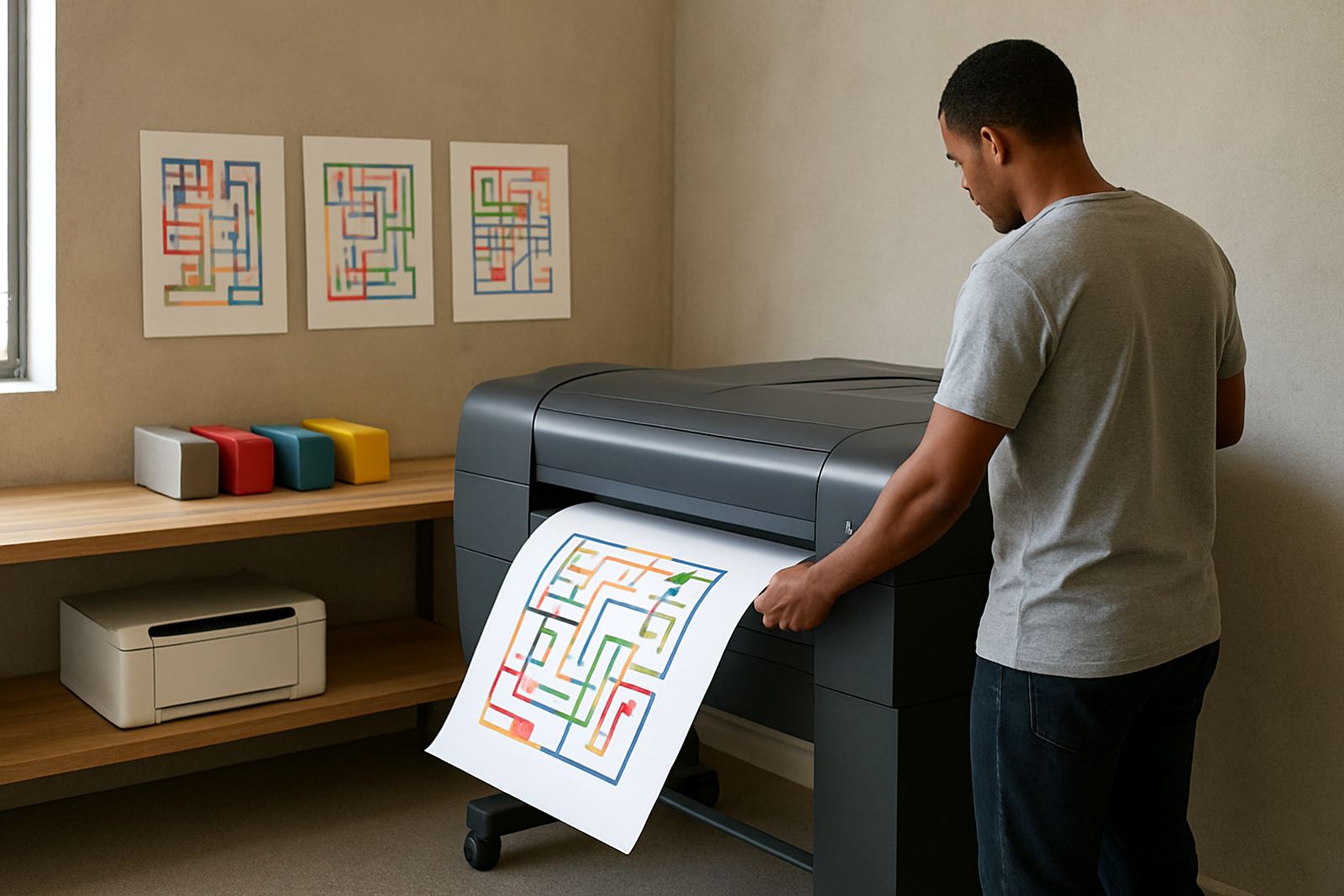
Within the first month the team saw fewer stalled jobs and less ink waste. Posters came off the machine with steadier colour and cleaner solids, so fewer sheets needed to be reprinted. The stock-matched inks also made it easier to keep running the same media profiles without constant tweaking. That matters when several people are sharing the same equipment and jobs are moving from concept to output quickly.
The client told us the biggest gain was predictability. They could estimate turnaround better and keep the workshop moving, even when power cuts meant they had to pause and resume later. The printer also fitted better into their daily workflow because it was set up for the kind of output they actually produce. Nothing flashy, just practical improvement that paid back through time saved and less spoilage.
- Fewer reprints on posters and proof sheets
- More stable colour on common media types
- Better ink control for recurring jobs
- Less disruption when the workshop is under pressure
What we would carry into another sign shop
We would repeat the same approach for another Montague Gardens sign shop or any Cape Town production team with growing colour demand. Start with the actual print mix, not just the size of the room. Match the printer to the work, confirm the media choices, and make sure the consumables plan is in place before the first batch goes through. That keeps the job grounded and saves the team from buying the wrong supplies later.
For sign shops working near the coast, we also recommend a short maintenance routine and a clear reordering plan. Salt air and humidity can affect storage, paper curl and print consistency, especially in summer. A practical supplier should be able to help with preventive maintenance, remote help, collection coordination and consumable reordering without turning it into a complicated process. That is the sort of support this client wanted, and its the sort that keeps a print room running.
- Review the real job mix before choosing the printer
- Match inks and media before installation
- Plan for power interruptions and humidity in Cape Town
- Keep a simple reorder cycle for fast-moving consumables
Key facts
| Project location | Montague Gardens, Cape Town |
|---|---|
| Client type | Sign production team |
| Printer class | Higher-capacity colour poster printer |
| Consumables | Stock-matched inks and matched media guidance |
| Timeline | 3 weeks from brief to steady production |
| Support included | Printer installation, print quality checks, user handover and remote help |