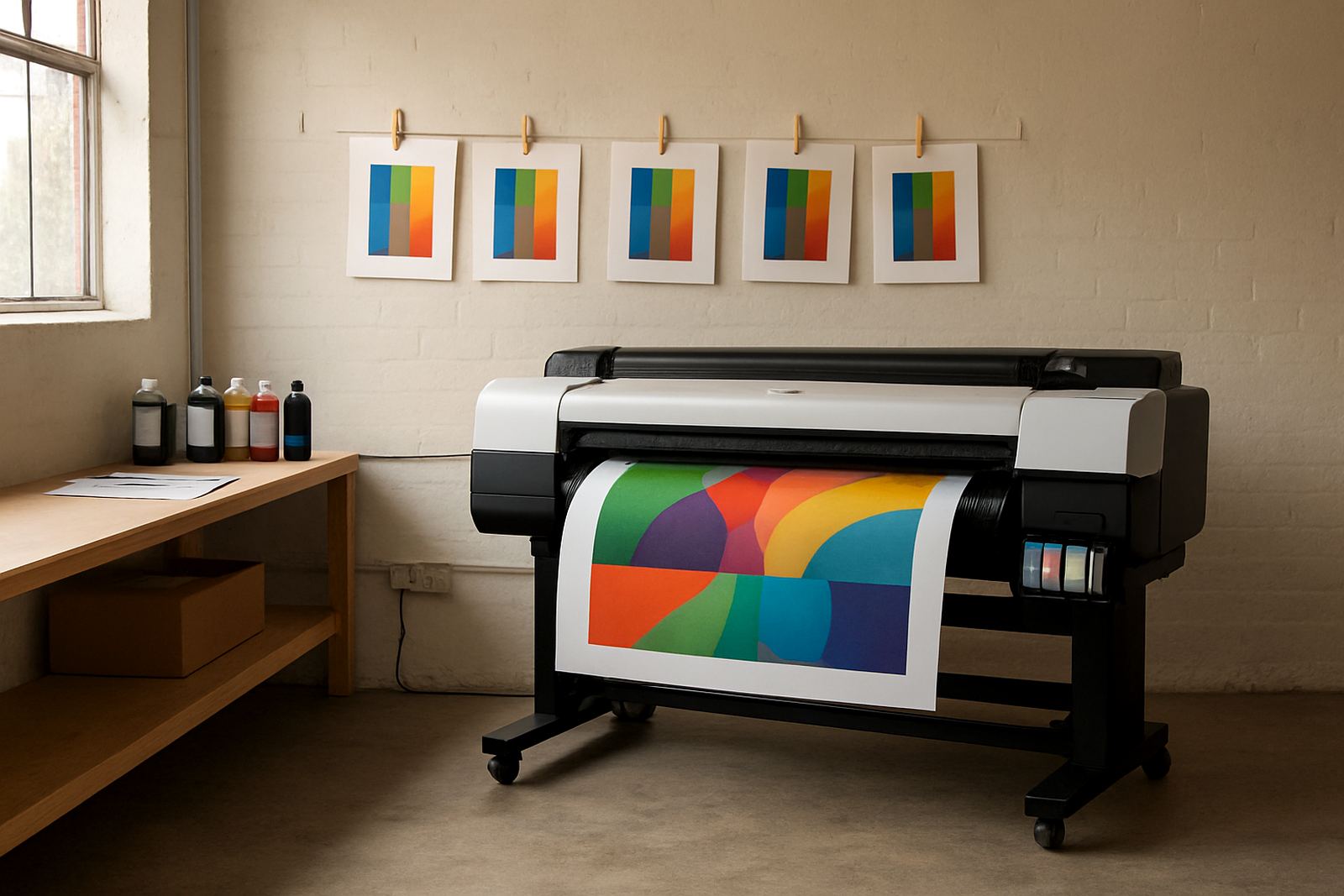
From outsourced proofs to a faster studio workflow
The client was a small creative studio in Woodstock, Cape Town, handling brand work, short-run posters and client proofs for local businesses. They had been sending colour output to an outside printer, which led to revision delays, higher transport costs and very little control over how each proof looked when it came back.
The brief was simple in principle but quite specific in practice: bring the key colour work in-house, keep the finish accurate enough for client sign-off, and make sure the setup could cope with normal studio pressure. They needed a solution that worked on a tight footprint, handled different paper types, and did not become a maintenance headache after the first busy month.
Because the studio is in a part of Cape Town where courier traffic, parking and turnaround time can all eat into the day, the team wanted local support as well as nationwide consumable supply. They also wanted advice that was practical, not technical for the sake of it.
What the studio needed to handle every week
The studio’s work pattern included quick proof prints, posters for pop-up launches, presentation boards and everyday colour admin. That meant the printer choice had to balance neat text output with stable colour on coated and uncoated stock. The team also needed a sensible approach to ink use, because nothing slows a studio down like running out of the one cartridge you need most on a Friday afternoon.
- Short-run colour proofs for client approval
- A3 and poster-sized output for internal presentations and event material
- Reliable printing after load-shedding, with proper restart checks
- Support for mixed media, including matt stock and heavier coated paper
- A simple reordering plan for inks and maintenance items
We also discussed the practical side of operating in Woodstock. Dust, temperature swings and occasional power interruptions can all affect print quality, so the equipment needed to be placed correctly and treated as part of the studio workflow, not just another machine in the corner.
The setup we supplied and commissioned
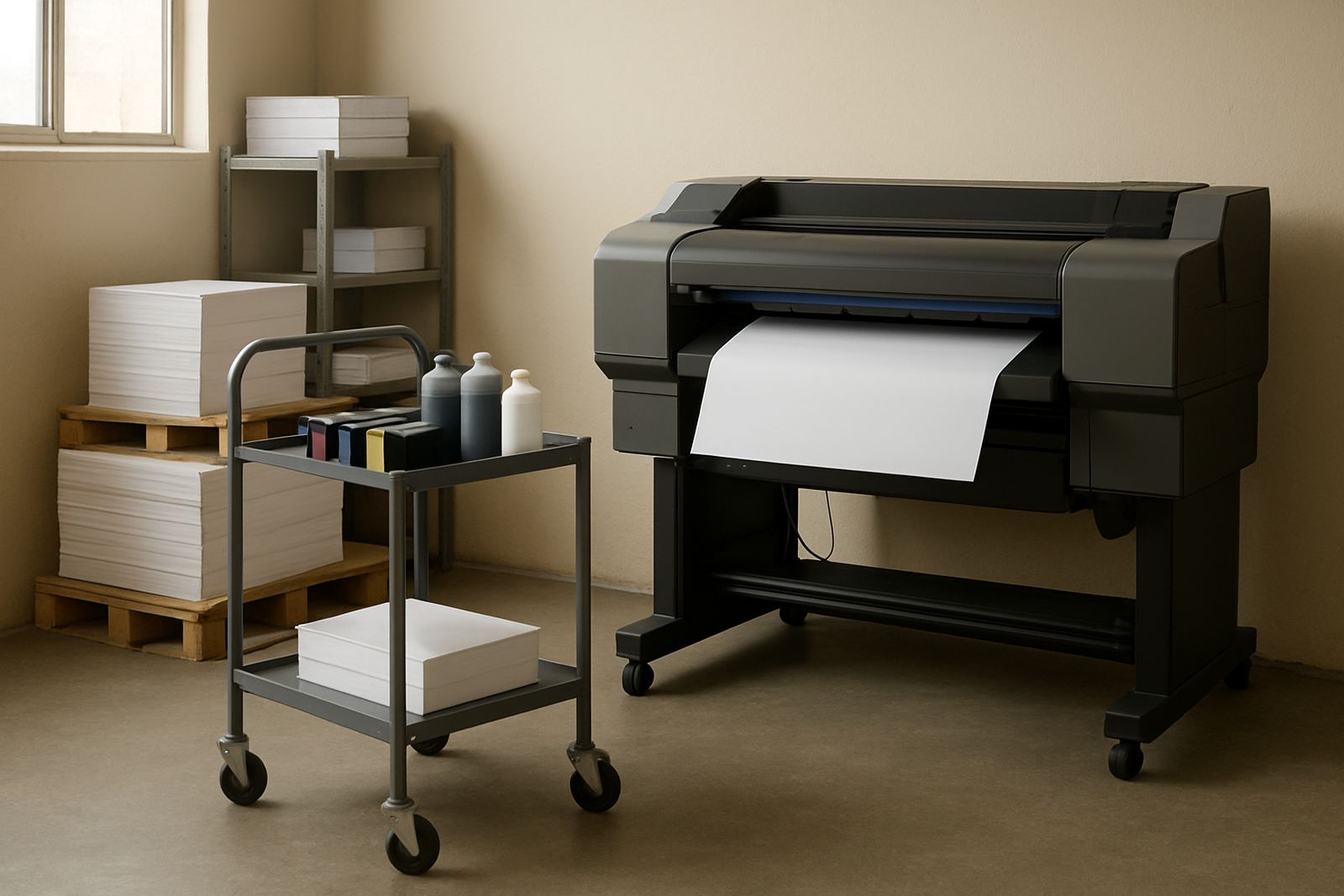
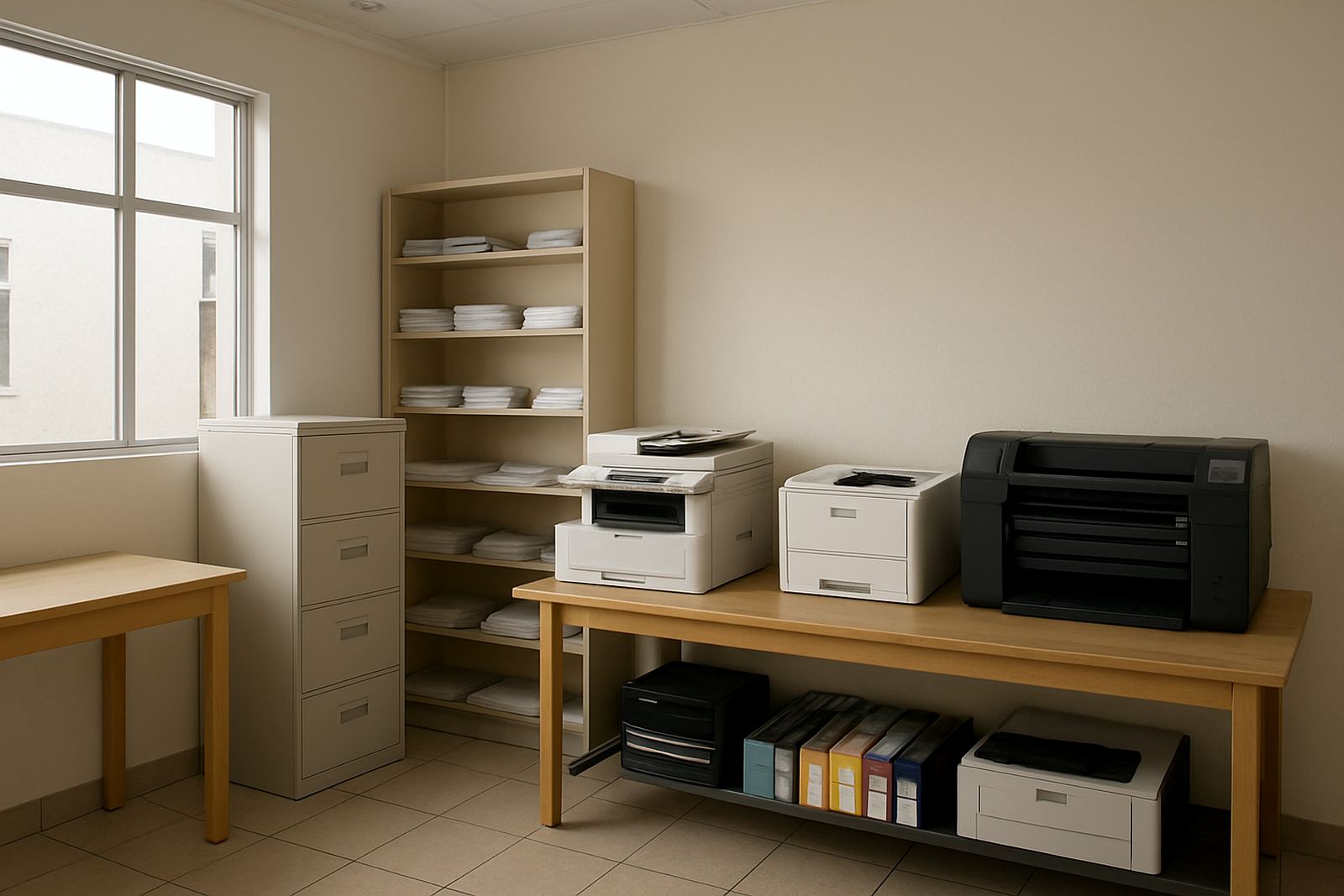
We supplied a desktop colour inkjet printer for everyday studio output and a larger-format colour machine for posters and larger proofs. Both were matched with the right ink set and media guidance, so the team could move between office sheets and presentation stock without guessing. The aim was not to overspec the space, but to give the studio enough range to print what it actually sells.
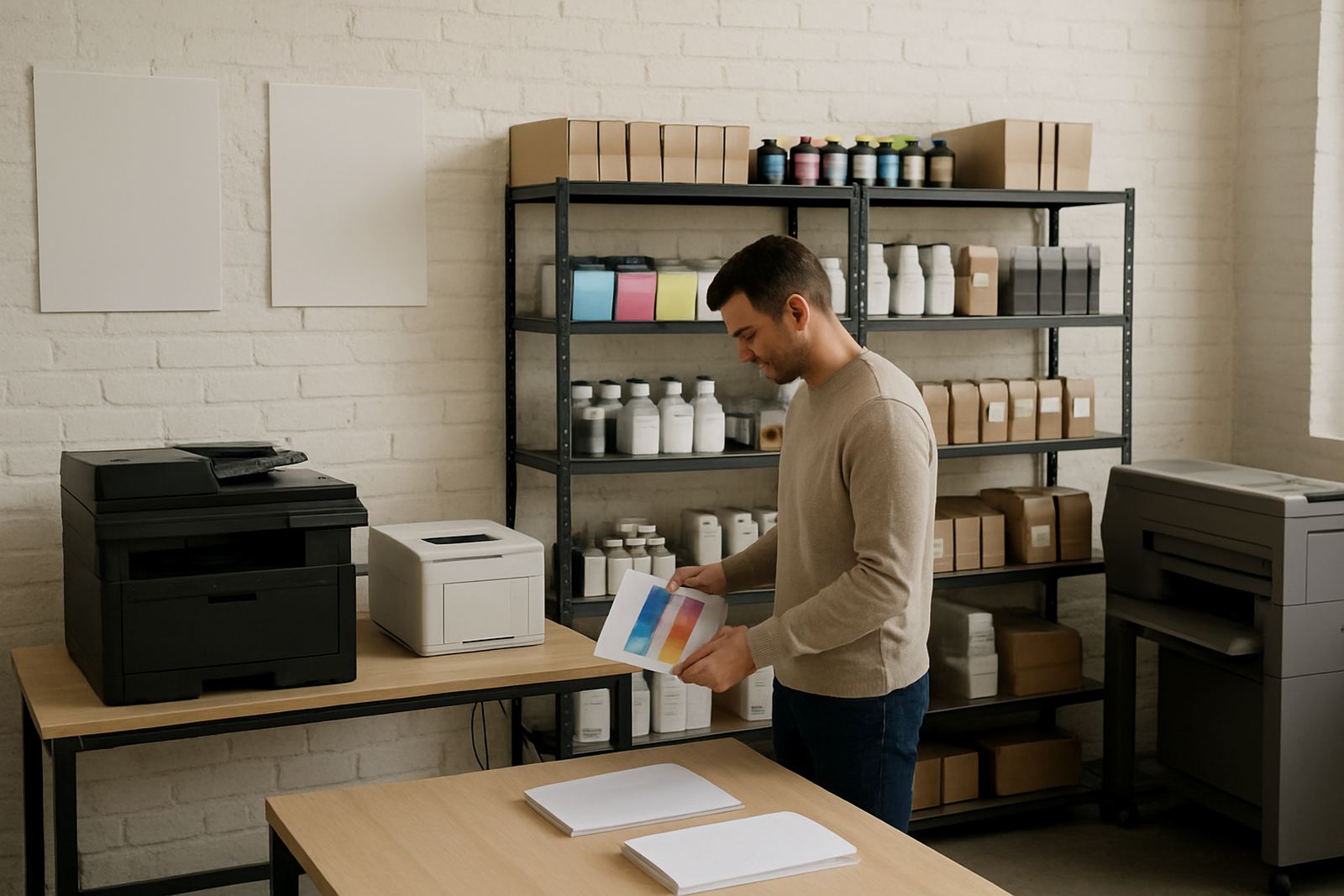
Our team handled delivery into Woodstock, placement, connection and first-run checks. We set up the colour profiles in a practical way, checked nozzle performance, and ran test sheets on the papers the studio uses most often. We also showed the staff how to keep the machines awake after idle periods, how to do a basic clean cycle, and when to stop and call for help rather than forcing another print.
- Desktop colour printer for proofing and day-to-day office pages
- Large-format colour machine for posters and bigger presentation work
- Matched consumables with clear usage guidance
- Media notes for common studio stocks
- User handover for two staff members who manage print output
Timeline and rollout over three weeks
The rollout took three weeks from first site assessment to steady in-house use. Week one covered the needs check, space measurement and media review. Week two was delivery, installation and print testing on the studio’s main paper types. Week three focused on user handover, ink planning and a few follow-up adjustments once the team started printing live jobs.
That short timeline worked because the studio had clear priorities and we kept the specification tight. There was no long waiting period for decisions, and no extra hardware added just because it looked useful on paper. Once the team saw the first clean proofs come out, the buying decision got a lot easier.
We also arranged a simple consumable reordering routine so the studio would not be caught short when a poster run came in unexpectedly. In our experience, that matters almost as much as the printer itself.
What changed once printing moved in-house
The biggest result was speed. The studio could now print proofs the same day instead of waiting on an external supplier, which made client approvals faster and reduced the number of awkward delays between design revisions. The team also had better control over colour matching, especially when a client wanted a poster adjusted after seeing a mock-up.
Quality improved too. By matching the machine, ink and media properly, the studio got more consistent colour from run to run, with fewer wasted sheets and fewer last-minute reprints. It sounds small, but for a busy creative team the savings add up quickly.
Another benefit was confidence. Once the staff understood which stock to use for which job, and how to handle basic maintenance, the print room stopped being a pain point. It became part of the workflow, which is really what in-house printing should be.
- Faster proof turnaround for client approvals
- Less dependence on outside suppliers
- Better control over colour and media choice
- Lower waste from test prints and repeats
- More predictable weekly print costs
What we would do again on a similar Woodstock job
For a studio of this size, we would follow the same approach again: start with the actual print jobs, then match the printer set to the way the team works. Not every space needs a large fleet. Often one reliable desktop unit and one larger-format machine are enough if they are supported properly and the consumables are managed well.
We would also repeat the same handover process. The people using the printer every day need to know how to load the media, check ink levels, clear simple issues and spot when print quality starts slipping. That saves time, and it keeps the machine running longer. A proper handover makes a real difference.
For studios in Woodstock, Montague Gardens or Bellville doing mixed creative work, our advice stays the same: start with the paper, then choose the machine, not the other way round. It keeps costs sensible and the output more predictable.
Remote support and consumables after installation
After the installation, we stayed on for remote help, consumable checks and practical advice whenever the studio shifted into a heavier poster week. Pieter handled follow-up service questions, Boitumelo kept the reordering plan tidy, and Jason coordinated dispatch so supplies reached the studio without fuss. That back-up matters when a deadline lands and the colour proof has to be right first time.
The client still uses the same core setup for daily proofs, poster runs and presentation sheets. The key is that the team now has a clear print process, from media choice to replacement ink, so the machine fits the studio rather than fighting it.
Key facts
| Project location | Woodstock, Cape Town |
|---|---|
| Project type | In-house colour proofing and poster printing |
| Timeline | 3 weeks from assessment to steady use |
| Print equipment | Desktop colour inkjet printer plus large-format colour machine |
| Support included | Installation, user handover, media matching and remote help |
| Supply model | Local setup in Cape Town with courier supply nationwide |