
Why urgent reorders happen when print work gets busy
Most last-minute shortages do not start with bad luck. They start with uneven usage, a few big jobs arriving at once and no clear trigger for when stock must be replaced. In a design studio or sign shop, one week can be quiet and the next can include proofs, posters, labels and short-run colour work all at once.
In Cape Town, the pressure grows when transport delays, load-shedding and month-end order cycles all land together. If the team waits until the last box of ink or roll of media is already open, there is no room for courier lead time or a quick quality check before the next run.
MyColour sees this often in Ndabeni, Montague Gardens and Bellville. The fix is not complicated. It is about knowing what is used, how fast it moves and what must be on hand before a job is booked.
Build a reorder point from real usage, not guesswork
A good reorder point is based on how much you use between deliveries, plus a safety margin. If a printer uses two cartridges a month and courier supply to Somerset West takes three working days, reordering only when the second cartridge is empty is too late. The same applies to wide-format inks and roll stock for posters or sign panels.
For busy offices, the simplest method is a 90 day view. Look at the last three months, work out average use and note the highest month. If one colour ran faster than the others, use that colour as the trigger. The goal is not to keep a storeroom full. It is to keep enough stock on site so work continues when delivery slips or a job suddenly grows.
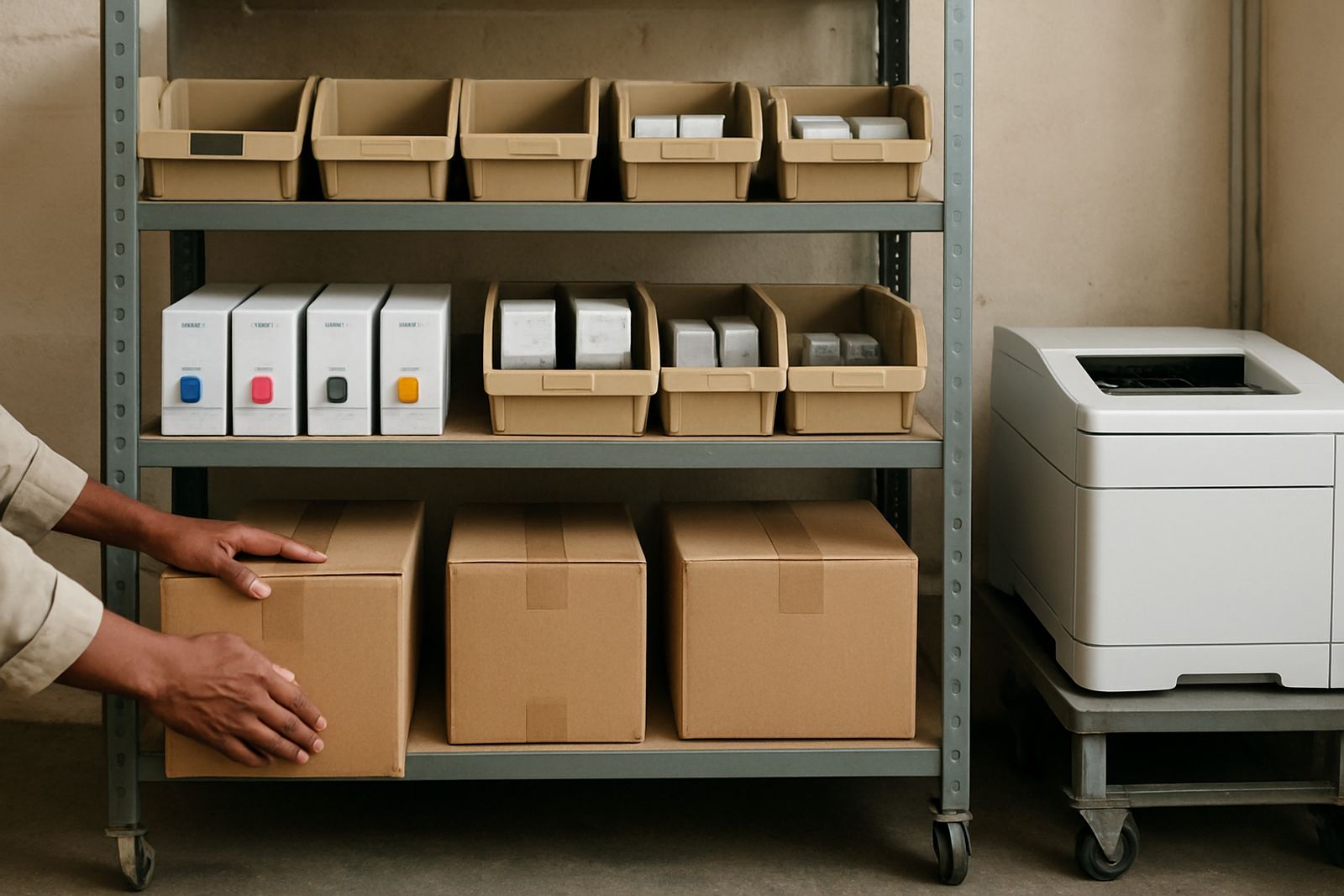
Ale neatly maintained stock sheets help, but the sheet must match the real shelf. A label in the cupboard should show item name, average monthly use, reorder point and who must approve the order. If one person leaves or goes on leave, the plan should still work.
Match ink and media to the work you actually print
Many urgent orders happen because the wrong consumable was selected in a rush. A team may have ink on hand but not the right media for the finish, the colour hold or the drying time. Another common issue is using office paper for work that should have gone onto a heavier coated sheet, then finding the finish is not acceptable.
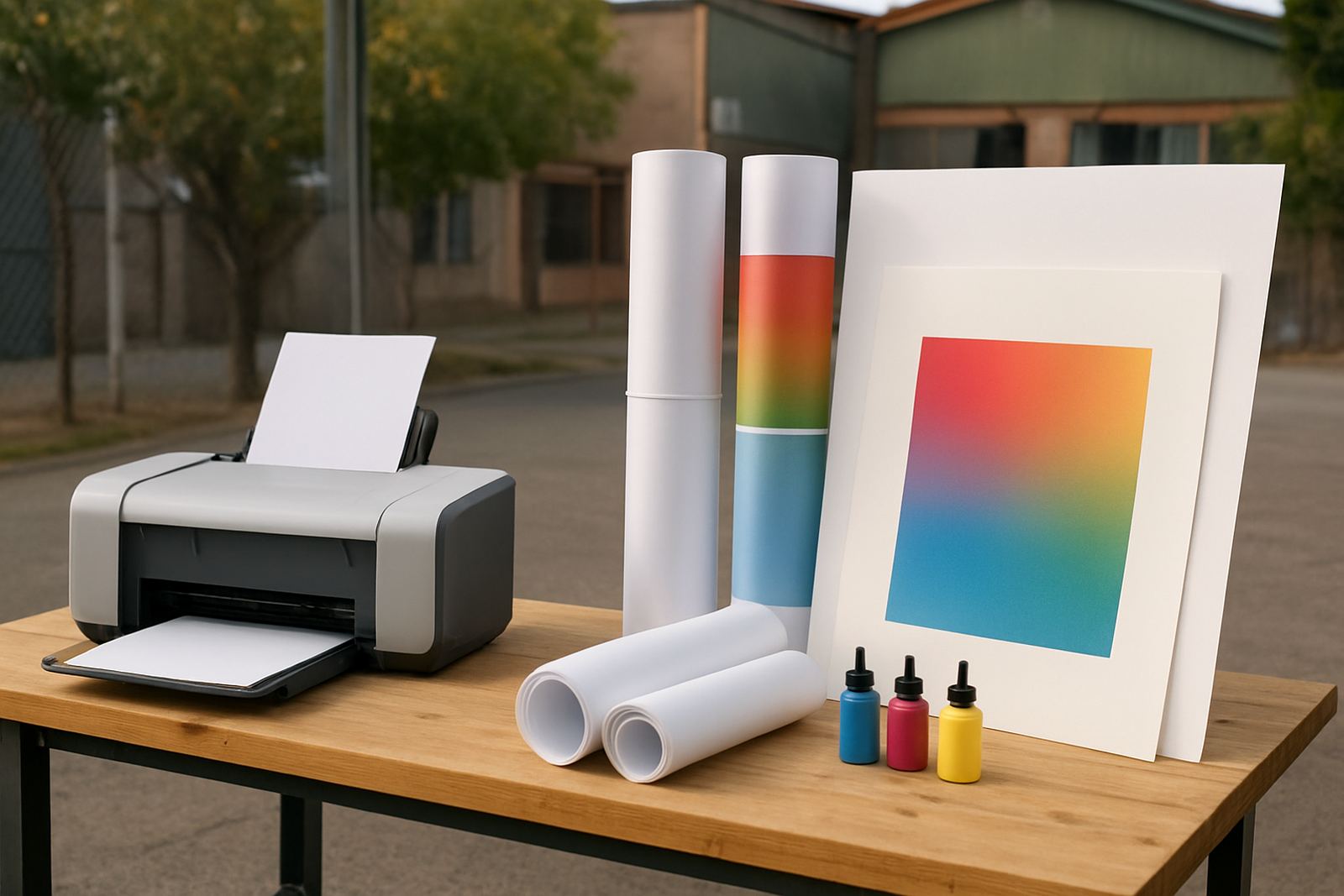
That is why media matching matters. If the job is for a proof, the stock can be different from a presentation print or a poster for retail display. If the work is for a damp coastal environment, the team should consider how humidity affects curl, feed and drying. In Cape Town and coastal towns nearby, paper stored in a warm storeroom can change before it even reaches the machine.
Practical planning means keeping the right mix on hand. Not every item needs deep stock, but the items that are used weekly should never be allowed to drop to zero.
Plan around service, maintenance and user handover
Stock shortages are sometimes service problems in disguise. A printer that is due for cleaning or a machine with worn rollers will consume more time and more consumables than expected. If the team is already running low on ink and media, a small fault becomes a stoppage.
That is why preventive maintenance and stock planning should be linked. When MyColour handles installation, wide-format setup or print quality checks, the team also looks at what the machine uses most often and whether the current ordering rhythm matches the work. A user handover should include simple rules for checking levels, logging usage and reporting a low-stock warning before the job queue is affected.
Keep the process practical:
- Check stock during the same weekly routine as basic printer cleaning.
- Log any unusual usage after a large proof run or poster batch.
- Replace worn parts before they cause waste from failed prints.
- Keep the consumables coordinator informed when a machine is moved or re-assigned.
Use courier supply to your advantage, not as a rescue plan
Nationwide courier supply is useful only when it is treated as part of the plan. If a site in Claremont or Woodstock waits until the last pack is opened, even a fast dispatch team cannot always beat the deadline. A good ordering rhythm gives enough time for picking, packing, collection and a quick check on the bench before the item is needed.
For offices and studios that reorder often, the best setup is a standing review day. That might be every Tuesday or every second Thursday, depending on job volume. During that review, the team checks ink levels, media counts and any special items needed for the next two weeks. If a big campaign is scheduled, the order goes out early and spare stock is kept aside for the job run.
This approach also helps with cash flow. Smaller planned orders are easier to manage than rushed purchases at month-end, when the finance team is already juggling supplier payments and client invoices.
A simple Cape Town example that saves real time
A sign shop in Ndabeni often has a mix of quick turn jobs and larger wide-format runs. One week it may print colour proofs for a design studio in Montague Gardens, then the next week handle posters for a retail client in Bellville and labels for a small event in Somerset West. If the shop only orders after the stock cupboard looks empty, the waiting time quickly affects delivery promises.
By setting a minimum level for its most used inks and keeping the main media sizes in planned stock, the shop can keep printing through a busy patch and avoid calling around for emergency supply. The same shop can also reduce waste by checking which media sizes move fastest and dropping slow movers that sit too long in storage.
This is the main point: urgent reorders are usually a symptom of poor visibility, not poor demand. Once the team can see what is running low early, the business gains back control of its print schedule and keeps customers moving.