
Start With The Room, Not The Shelf
The first rule is to store media in a stable room, not next to a loading bay, open window or sunny wall. Paper and rolls absorb moisture from the air, then release it again when the weather changes, and that is when you see curl, waviness and ink laydown problems. In Ndabeni or Montague Gardens, a storeroom that feels cool and dry through the day is usually better than a hot corner near the roller door.
Keep cartons off the floor on pallets or shelving, at least 100 mm up from concrete. Concrete draws in moisture, especially after winter rain or when a premises has wash-down cleaning. If the room has a habit of trapping dust, seal gaps around doors and keep the area tidy because fine dust ends up on print heads, rollers and edges. That means more cleaning and more waste.
Let Sealed Packs Do Their Job
Most paper is packed to protect it, so leave reams and boxed sheets sealed until you need them. Once a pack is opened, the paper begins adjusting to the room and can shift in size or curve at the edges. For busy offices this often shows up as feeder mis-picks or a slight wave in colour jobs that should have stayed flat.
If you only use part of a ream, wrap the rest tightly in its original cover or a clean plastic sleeve. Store opened media in the same direction it was packed and avoid leaning stacks against a wall for long periods. A stack that sits at an angle for weeks can pick up a set, and then the sheets do not lie flat in the tray.
- Open only one ream at a time where possible
- Keep spare reams in their box until needed
- Mark opened packs with the date so older stock is used first
- Do not leave paper near tea rooms, sinks or outside doors
Treat Rolls Like Precision Stock
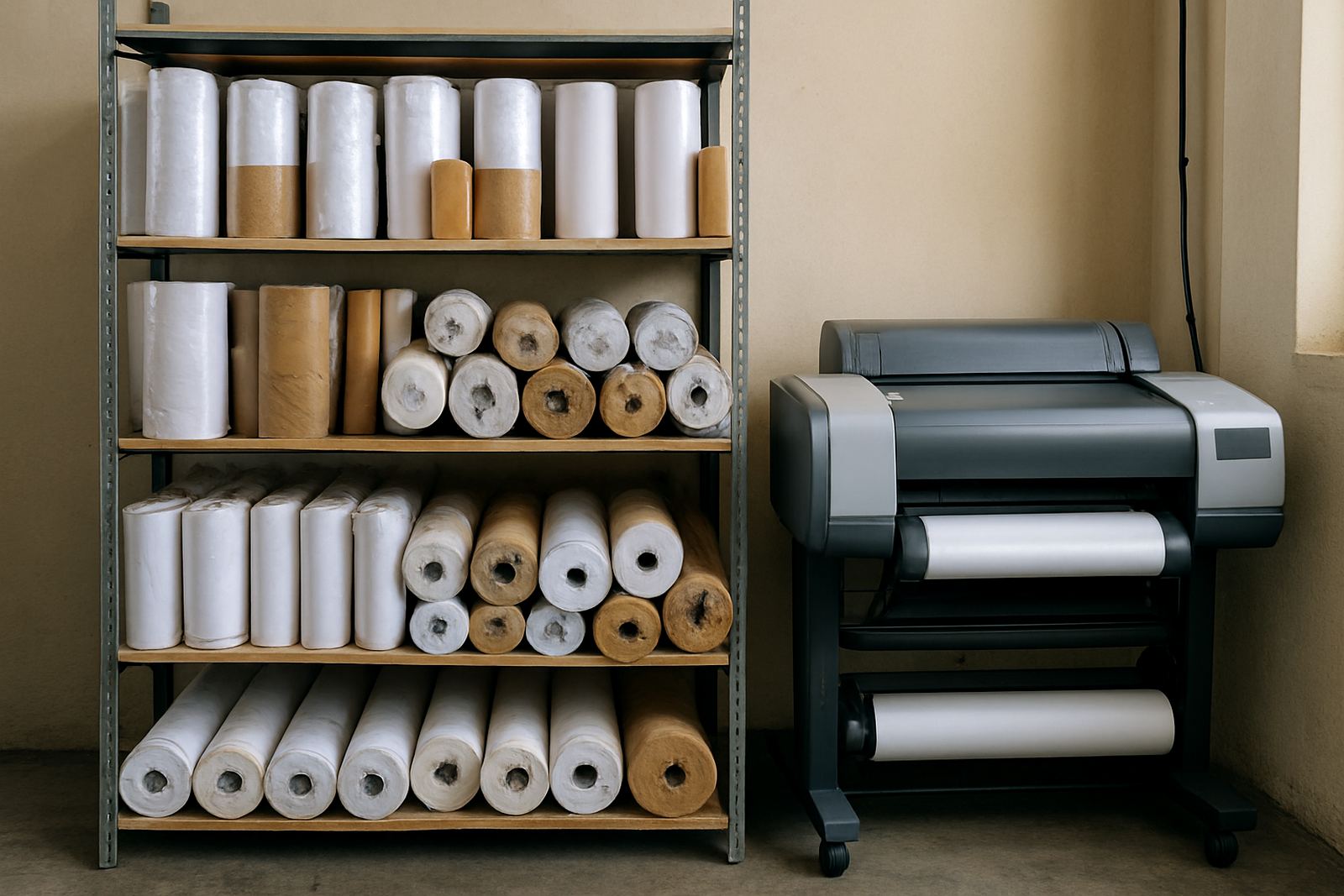
Large-format rolls need their own discipline because the edges and core can be damaged long before the roll is empty. Store rolls horizontally on proper supports, not standing upright where they can warp or crush at the base. If rolls must be stacked, keep them evenly supported and never put heavy items on top.
For sign shops in Cape Town that do banner work, poster runs or proofing, it helps to keep each roll labelled with the media type, width and purchase date. That makes it easier to match the job to the right stock and avoid opening a premium coated roll for a short test print. It also helps when you need to rotate older stock before it absorbs too much moisture.
- Use end caps or original packaging to protect roll edges
- Keep rolls away from direct sun, even through a window
- Store adhesive media flat and dust free
- Check for dents in the core before loading into the machine
Match Storage To The Coastal Climate
Cape Town’s coastal humidity can be kind one week and troublesome the next, especially in areas closer to the harbour or where night air cools quickly. Paper stored in one condition and printed in another will move, and that movement can affect registration and finishing. When the weather turns damp, allow media time to acclimatise in the print room before running a job.
A practical approach is to move only the amount you will use that day into the production area. If a roll has been kept in a drier store room, let it sit in the print space before loading it so it settles. That small step can prevent wasted metres on wide-format jobs, which matters when a rush order lands after load-shedding or a late client change.
Use Clean Handling Habits Every Day
Media problems often start with hands, not machines. Oils from fingers can mark coated paper and leave spots that only show once the job is printed. Train staff to carry sheets by the edges and to keep roll faces covered when they are not in use. In a small studio or office, one messy work area can contaminate the next three jobs without anyone noticing.
It also helps to keep cutters, blades and trimming tables clean. Frayed dust from previous jobs lands on fresh stock and then travels straight into the printer. A quick wipe with a dry lint-free cloth before loading media is simple, but it saves time and keeps colour proofs looking sharp.
Build A Stock Plan Around Real Usage
The best storage system is the one matched to your actual print volume. If a Claremont studio prints presentation proofs every few days, it should not hold months of paper at once. If a Bellville office runs invoice batches and internal reports, its storage needs will be smaller but more varied. The point is to keep just enough stock on hand so it turns over before curl or dust become a problem.
Set a reorder point for each paper size and each roll type. That way consumables arrive before someone starts mixing incompatible media or grabbing a roll that was meant for another machine. It also makes reordering calmer when a client suddenly wants posters, point-of-sale sheets or same-day proofs.
- Track monthly usage by size and finish
- Separate office colour stock from wide-format stock
- Keep a small emergency reserve for urgent jobs
- Rotate stock so older packs leave first
When Storage Problems Start Affecting Print Quality
If sheets are still curling after proper storage, or if rolls keep picking up dust marks and edge lift, the issue may go beyond the storeroom. Feed rollers, humidity swings and incorrect media settings can all make the problem worse. In that case it pays to check the full chain from storage to loading to print settings rather than blaming the paper alone.
For teams in Ndabeni and nearby areas, a practical review can identify whether the media, the machine or the handling routine is causing the waste. Sometimes the fix is as simple as moving stock, changing the media choice or setting a better schedule for use. Other times it means stepping up from office colour to wide-format stock that suits the job better.
MyColour works with design studios, sign shops and offices that need colour stock to arrive in good condition and stay usable. If you are unsure how to store a particular paper or roll type, ask before the damage shows up on the print run. A short conversation now can save a lot of Rand later.